Entrepreneurial & Leadership Initiative
for a Sustainable Africa (ELISA)
ANIMAL FARM
Elisabeth Pasalk Valerio, founder of ELISA along with her husband, Danny, offers details about the Animal Farm. Located in Hwange, the Animal Farm, which is among many facilities the couple established in Zimbabwe at Gwango Wildlife Park, which is aligned with ELISA, a robust initiative driving cross-sector collaboration across Africa.
Designed to be eco-friendly, our Animal Farm is housed and securely contained within a small walled space to avoid any negative impact on the ecosystem.
This endeavor began as an anti-poaching effort in Dete – a developing town in Zimbabwe – to help the community find alternative ways to grow food in an effort to reduce the poaching of elephants and other species of wildlife.
After conducting endless research on mushroom growing, eland husbandry and other ideas, we discovered the benefits of raising rabbits, which are a suitable meat alternative because rabbit meat is incredibly nutritious, and the reproduction rate is high.
The initial goal of our Animal Farm was to develop a teaching model so students in this community could learn about rabbit breeding, and has since grown to other teaching models that involve chickens, pigs and goats.
Rabbits
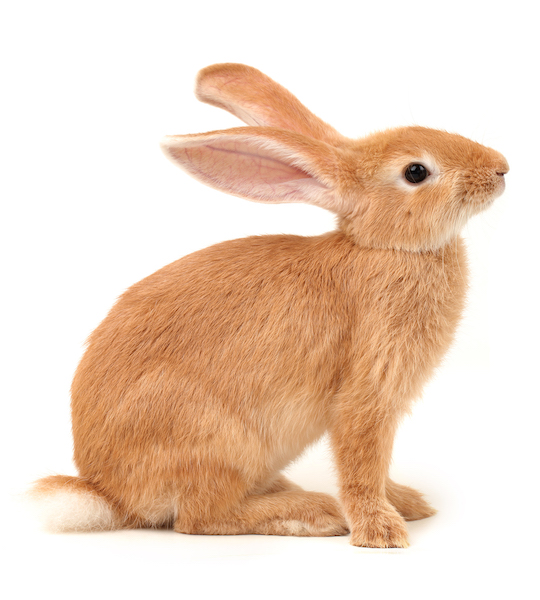
We began our Animal Farm with 2 bucks and 6 does that we purchased in Harare, the capital city of Zimbabwe, and later purchased a few more rabbits from nearby villages. Our first buck, Red, is a New Zealander Red breed, and Snow is a New Zealander White. We also have several Chinchilla and Angora breeds.
Before long, we had dozens of rabbits and we built a warren, an enclosed establishment of animal husbandry dedicated to the raising of rabbits for meat. At first, our 80-square-meter rabbit home consisted of makeshift wooden and wire hutches, and has since evolved into a construction of more comfortable brick hutches with sand floors housing 35 breeding does, 8 bucks and their many offspring. We currently breed over 2,500 rabbits per year.
Through this rabbit project, we learned many skills, including how to design hutches, nest boxes, and feeders; as well as how to keep records and how to optimize the productivity of our does. Our latest focus is on developing our own rabbit pellets to feed these adorable animals and make this project sustainable. We recently ordered a pelletizer which we expect to add to the project facilities by the end of 2019, and will enable us to formulate our own feed. We also recently acquired a meat mincer which has been installed in our Food Research Centre and is being used to produce a range of rabbit meat products such rabbit mince, rabbit sausages and pets mince.
Since the rabbit breeding project began on our Animal Farm in 2017, we have hosted several workshops to educate agriculture teachers from local high schools about what we learned. During the workshops we cover a range of topics, including:
- Equipment
- Economics of rabbit breeding
- Breeder stock
- Managing the warren
- Nutrition
- Mating
- Record keeping
- Sanitation and fly control
- Rabbit manure as a fertilizer
- Rabbit diseases
- Meat processing
Chickens
We love our chickens – we call them “the nuns” – and Danny often jokes that our rabbit warren runs like a brothel, and the chicken coop runs more like a convent.
Ironically, the story of our poultry farming was inspired by some local nuns. Close to our location at the edge of Hwange National Park is a Catholic mission in Dete, where the nuns sold trays of beautiful fresh eggs. Picking up a few trays each week was part of our routine until we arrived one day and discovered the nuns had got rid of all of their layer chickens – the massive shed where they housed their chatty hens was empty and silent.
It’s important to understand that acquiring eggs around here is no small feat. The local stores do not carry a consistent supply of eggs, so our only option was to buy them in the city of Bulawayo, which is a three-hour drive away, or in Hwange town, which is over an hour drive, but doesn’t always have eggs. In addition to the challenge of distance and the cost of transport, we faced the occasional disappointment of buying a tray of eggs from a grocery store that had a difficult journey to the seller’s destination. Numerous times, we bought egg trays from these stores, only to return to the Gwango Wildlife Park with old eggs.
For me, discovering that the nuns stopped egg production was a huge disappointment, but Danny’s reaction wasn’t as bleak. I asked the nuns why they stopped production – and tried to convince them to restore the project – but they explained it was too costly and ultimately unsustainable. Danny’s foresight offered a solution when he said to me: “let’s get some layer chickens of our own.”
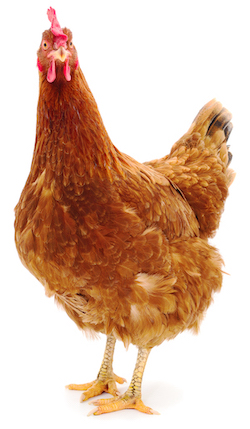
With that, Danny and I agreed to acquire a few chickens to lay enough eggs for our needs and to supply our restaurants at Gwango. In 2017, Danny took the lead on this project, while I took on the task of identifying an appropriate location where our chickens would be housed.
We never set out to keep egg laying poultry birds for the purpose of commercial egg production, because most of our Animal Farm projects are designed to supply our own needs and serve as a model where others can learn from our farming practices. But this chicken project became a labor of love that gave us an opportunity to learn about them – and the important role they play in our community here.
Layer chickens – a special species of hens that must be raised starting at one-day-old – start laying eggs between 18 and 19 weeks of age. I was tasked with sourcing the chickens, and later learned we would have to find birds known as “point of lay” chickens. These chickens undergo a rigorous development process before they reach this point, so Danny and I decided to skip that stage and purchase the chickens when they were ready to lay eggs.
Through this process, we learned that there are two types of hens:
- The type that lay white eggs. These hens, which are smaller in size and eat less food, include Bab Cock BV-300, Bovanch White, Havard White, Hi line White, Hi Sex White, Isa White, Lehman White, Nikchik and Sever White.
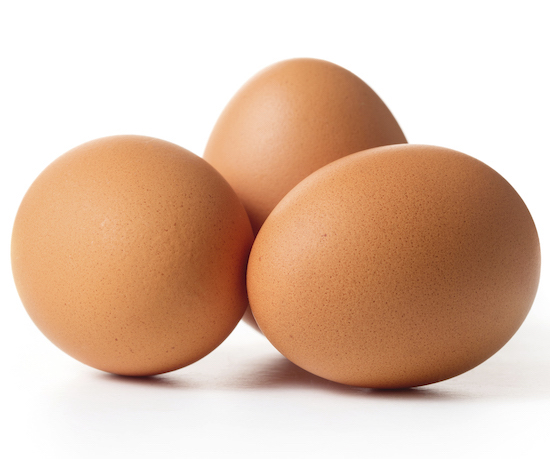
- The type that lay brown eggs. These hens are larger in size, eat more than white egg layer chickens, and produce larger eggs. They include Bab Cock BV-380, Bablona Harko, Bablona Tetro, Gold Line, Havard Brown, Hi Line Brown, Hi Sex Brown, Isa Brown, Lehman Brown and Sever 579.
After making dozens of phone calls, I found the only supplier of layer chickens was located in the city of Bulawayo, which is a three-hour drive away. I also discovered there was a long waiting list, because the layer type chickens were not available for sale year-round, which meant we would have to reserve some chickens and pick them up when they were ready. The ready date turned out to be weeks away, which gave us sufficient time to prepare housing for them. I wasn’t given a choice of the type of chickens we’d receive, and today, we do not know the type of breed we have. We were simply told we’d receive the birds in a few weeks, and I placed an order for 12 birds, because I was told they would produce 2 eggs each per day. At the time, a tray of 24 eggs per day seemed like plenty.
Egg production requires good care and farm management. Chickens require daily attention to ensure good egg production. They must be let out of their coop in the morning, and closed back into the coop at night. Their housing must also be cleaned daily, and the chickens need plenty of fresh clean drinking water. We decided to buy feed from a wholesale supplier, and we found a man in our local community who was able to make several poultry feeders and drinkers to supply the hens with food and water.
To house the chickens, we chose a building that was used as our first kitchen. Danny didn’t want the chickens housed in the conventional wire cages, and we both wanted happy chickens. So we built our hens a 6-square-meter structure, with a 8-square-meter veranda, so they would have plenty of space to run around. The old kitchen ended up serving as an apartment of sorts – the chicken coop – and the veranda became the perfect airy space where the birds could spend their days in the chicken run and area for nesting boxes.
We had to modify the structure a bit, adding gauze wire over the windows and wire mesh around the sides of the veranda to protect the chickens from our area’s predators, which include snakes, leopard, monkeys, and baboons.
We received our chickens in mid 2017 – but that was after a heart-wrenching experience that left us with only 3 chickens. We had arranged for a young man to transport the hens by bus from the city 3 hours away, and sadly, most of the birds died from stress and/or dehydration during the long hot journey. We eventually added 9 more hens to the farm later that year and in 2019, we purchased 21 more, making the total current count 33 layer hens. In the beginning, there was a bit of a squabble when we received each new batch of chickens, as the previous inhabitants of the chicken coop would attack the new ones, but eventually, everyone got along nicely. Today, they are laying beautiful large brown eggs.
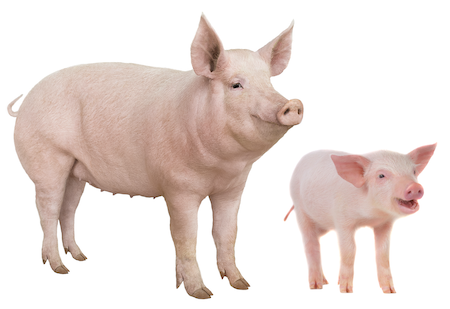
Pigs
Recently, we received a gift from Chief Nekatambe, a respected leader our community, of two healthy piglets, who we named Victor and Victoria. The boy piglet was named after our first employee, Victor, who has become like a son to us.
Today, our Animal Farm is home to two well-secured pig pens designed to keep the leopards and lions out, as well as an open pen that sits under the shade of teak trees. Visitors love interacting with Victor and Victoria, who are so big now, we expect to see them have piglets soon – although breeding pigs is not our major focus.
At first, Victor and Victoria were fed a diet of store-bought porridge mix, but we eventually found a more sustainable way to feed them using food scraps from our restaurant and cafeterias. We discovered an interesting dynamic with our pigs consuming food scraps: they’re also contributing to seed production. For example, when the pigs eat cuttings from butternut, and we clean out the pig pens, the pig refuse provides a perfect environment for the development of small seedlings – so we’re able to grow more butternut.
Goats
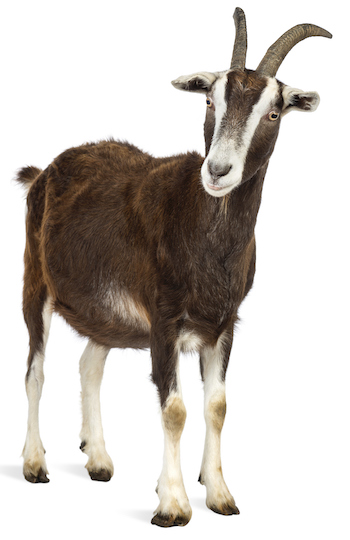
The idea to have goats on our Animal Farm was inspired when we observed that almost all of the villagers in our local community own goats. This sparked our interest in ways we could make goats more productive, which led to our idea of pasteurization and goat cheese production.
Today, we have 2 doe goats and 2 billy goats. Suzie is our first doe, and we built a milking stand for her, giving her a way to produce the sweetest milk we’ve ever tasted.
Our special goats inspired other endeavors we plan to pursue, including the future production of goat milk lotions, goat milk soap, and more, which we will soon produce in our Innovation Products Lab.